
While there are plenty of laptops to choose from on the market, not all of them meet the right balance of affordability and performance that's needed for a student laptop.
We mention this balance because, the cheapest laptops available won't cut the mustard for performance, especially if you need to do any creative work or other media manipulation.

Lindsay is a long-serving contributor to TechRadar, handling testing and reviews for a wide range of products. He especially loves to benchmark the latest laptops, but also can't resist testing power banks and all things charging related.
The best student laptops in 2026
Why you can trust TechRadar We spend hours testing every product or service we review, so you can be sure you're buying the best. Find out more about how we test.
Below you'll find full write-ups for the best student laptops, no matter your needs.
The best student MacBook

Apple’s laptops don’t come cheap, but they stand out for their premium build quality and exceptional battery life, making them a great fit for students. While many prefer Windows over Mac OS, MacBooks are widely supported by schools, which makes them a convenient and reliable choice.
And sure, not everyone wants to pledge allegiance to the Church of Apple, but even the most die‑hard PC fans have to admit the M‑series chips are seriously good. You’ll pay a bit extra for the privilege of a Mac compared to a similar (or better) spec Windows machine, plus pricing in New Zealand usually means a few more dollars than our mates across the ditch – but in return you get excellent build quality and battery life that leaves most Windows laptops sobbing quietly in the corner.
The new M4 MacBook Air looks almost exactly like the M3 version. Which is just fine with us, as Apple’s minimalistic design is both functional and looks great. Our tests showed it lasts about 14 hours on battery, and yes, it finally has dual Thunderbolt 4 ports so you can run two external monitors natively. The base model now comes with 16 GB RAM, which is a win, but it’s still a fanless design – so if you hammer it with heavy workloads for too long, performance drops.
Pricing starts at quite reasonably levels, but fully kitted out with 32GB RAM and a 2TB SSD and you’re suddenly in could’ve bought a second-hand car territory.
If you don’t need the latest and greatest, the M3 model is still very, very good – and occasionally pops up with big discounts. Even the M2 is occasionally still available at bargain prices. So if you are looking to save a little cash, have a read of our M2 MacBook Air and Apple MacBook Air 13-inch (M3) reviews.
Read our full Apple MacBook Air 13-inch M4 review
The best Windows laptop for students
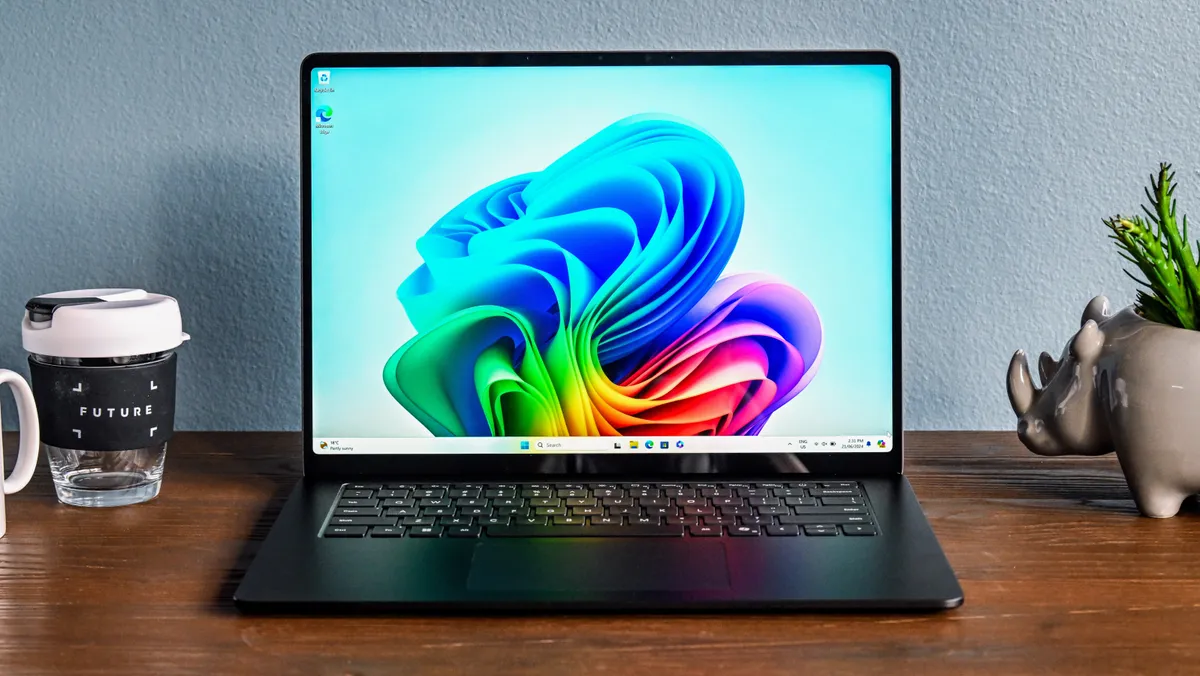

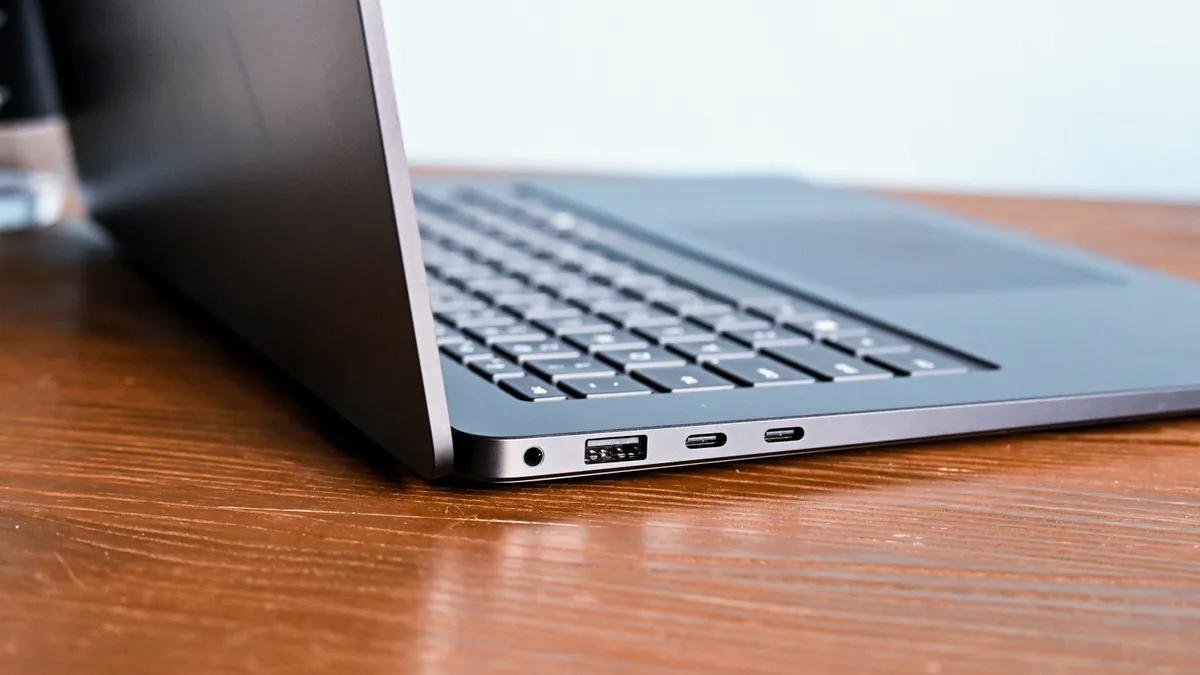
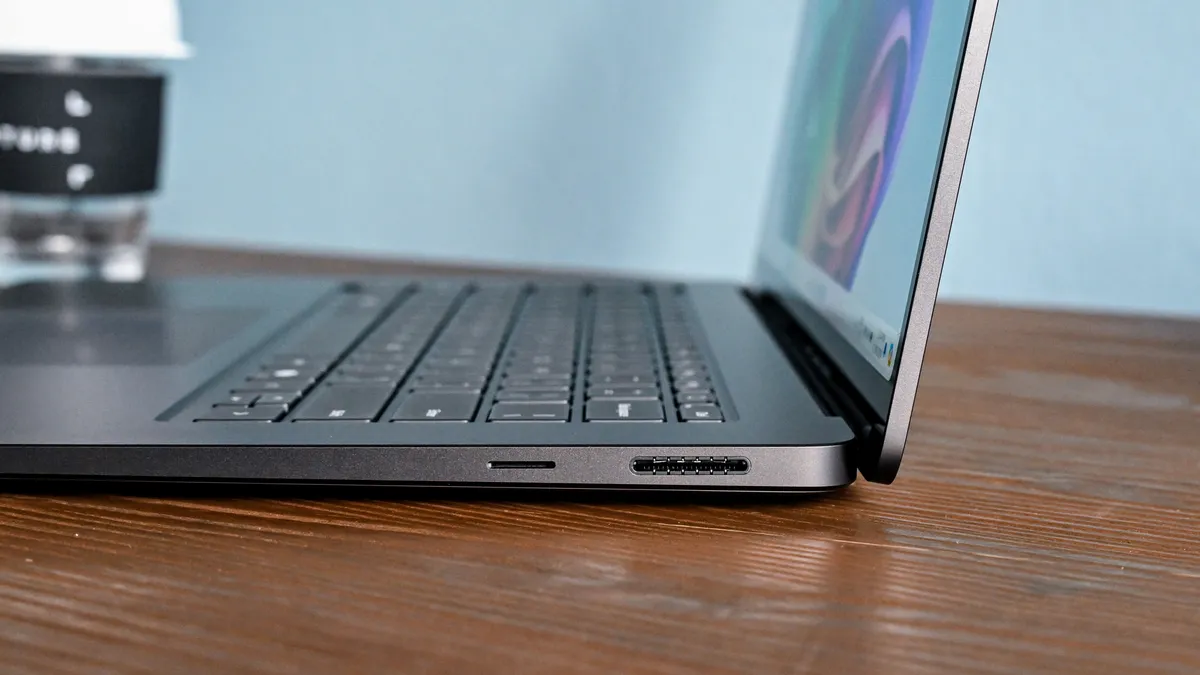


If you need to run Windows and want the best, then the Surface Laptop range is hard to beat. Sure, Windows has plenty of faults as an operating system, but it's never felt quite so nice to use as on the new Surface Laptop.
It might look like a normal laptop if not for the range of colours available, but uses a premium all-metal design that (finally!) favours robust repairability over being extra slim and light.
The Surface Laptop's secret sauce is the Snapdragon X Plus and X Elite processors from Qualcomm. These new Arm CPUs match the best Apple silicon, giving excellent performance yet remaining efficient enough for true all-day battery life.
The Surface Laptop comes in two main models with either 13.8-inch or 15-inch forms. The 13.8-inch can be equipped with the slightly less powerful X Plus CPU, or the faster X Elite, whereas the 15-inch model only comes with the X Elite. Either size can have up to 32GB of RAM and a 1TB SSD. The 15-inch laptop has a 2496 x 1664 (201 PPI) display, while the 13.8-inch screen is a 2304 x 1536 (201 PPI) resolution – though both are IPS panels with a touchscreen, plus a high 400-nit brightness and excellent colour reproduction.
The Snapdragon is an Arm CPU, so some Windows software without a native version can experience a slight reduction in performance (and compatibility issues in some cases), but isn't a concern for mainstream apps. For easy tasks such as playing video, the 66Wh battery in the 15-inch Surface Laptop lasts over 25 hours. Even in heavier workloads, the laptop lasts between 10 to 15 hours on battery and easily makes it through a day of work. The 13.8-inch Surface laptop has a slightly smaller 54Wh battery but almost as long run times away from the charger.
The Surface Laptops include 2x USB 4 Type-C ports that handle video out and 65W charging, plus a single USB-A connection. We appreciate that Microsoft has also kept the magnetic Surface charging port (it does data and video output), keeping your USB-C ports free for other accessories, and letting the laptop work with older Surface docks.
The Surface Laptops are premium devices with a price tag to match, and the 13.8-inch model starts from AU$1,899 with 16GB of RAM, while the 32GB option is AU$3,399. The 15-inch model starts at AU$2,399 for 16GB RAM, and ranges up to AU$3,699 for the top spec 32GB machine.
Read the full review: Microsoft Surface Laptop 13.8-inch
The best laptop for creative studies

If you are studying a class or course with video or image editing, the MacBook Pro is a solid choice as it gives great performance and battery life.
The latest MacBook Pro 14-inch and 16-inch models now pack Apple’s shiny new M5 CPU, as well as M4 Pro, or M4 Max processors. Performance is up compared to the older M3 Pro/Max models, but we’re talking smaller, not a night and day difference. If you can still track down last year’s model for a bargain price, it's arguably the smarter buy.
The MacBook Pro is a powerhouse machine in an ultra-portable shell, and Apple’s M-series chips delivers serious performance while sipping power compared to most Windows rivals. In other words, you can get serious work done on the go without scrambling for a charger (or one of the best power banks) halfway through the day.
The Pro has three Thunderbolt 4 ports (Thunderbolt 5 on the Max and Pro models), and external monitor support depends on the chip: the base M4/M5 model and the M4 Pro handles two displays, while the M4 Max does up to four. The Liquid Retina XDR display is as stunning as ever – wide colour gamut, 120Hz refresh, 600 nits in SDR, and up to 1,000 nits sustained (1,600 peak) in HDR mode.
If you are already deep in the Apple ecosystem, the decision here is easy. But even for new to Apple but power-hungry creatives who are often on the go but dock into a full workstation setup at home or in the office, the MacBook Pro is an appealing, if pricey, option.
Read our Apple MacBook Pro 14-inch M5 (2025) review
The best budget laptop for students

For students who want an affordable yet durable Windows laptop, Lenovo’s ThinkBook range is worth a look. Built with business users in mind, it still offers the performance and build quality needed for school, uni, or just everyday use. One of the best-value picks is the AMD-powered ThinkBook 14, which can usually be found for under NZ$1,500. Discounts are rare, but you can sometimes score a small saving through Lenovo’s Education Store.
The AMD ThinkBook 14 comes with either a Ryzen 5 7535HS or Ryzen 7 7735HS processor, 16GB of RAM, and a 1920 × 1200 IPS display. Its 45% NTSC colour coverage rules it out for creative work, but it’s fine for productivity and general use. If you are buying one, it’s worth opting for the 60Wh battery upgrade to comfortably get through a full day on a single charge.
If you want to spend even less, the older Gen 6 ThinkBook – available with Intel or AMD processors – is also a solid option.
While we have not yet been hands on with this exact Gen 7 ThinkBook 14 model, those interested can check out our review of the similar ThinkBook 14 2-in-1, keeping in mind that it has an Intel CPU.
Can't find a ThinkBook you like? The ThinkPad is a slightly more premium (but very similar) machine – check out our Lenovo ThinkPad T14s review for more info.
The best 2-in-1 for students

While most students just need a standard laptop, for some classes a touchscreen 2-in-1 model that can double as a tablet can be very helpful. You only need to worry about this if your school recommends a 2-in-1, so if in doubt, double check.
As a premium 2-in-1, the HP OmniBook Flip Ultra delivers high-end features – and a price tag to match. The good news is that discounts of 20% (or more) are fairly common, which makes it a far better deal. Even at full price, the Flip Ultra holds its own against similarly specced rivals and, for example, it will comfortably outperform the fanless MacBook Air in sustained workloads.
Its 2880 × 1800 OLED touchscreen is great for creative work or note-taking. The metal chassis and fold-over hinge make switching between laptop and tablet modes easy without sacrificing durability, while extras like a facial recognition webcam and Thunderbolt 4 ports are nice premium features to have.
The Flip Ultra features the latest Intel Ultra Series 2 CPUs and up to 32 GB of RAM and gives a decent balance of performance and efficiency. Battery life is another strength, with up to 12 hours on a single charge – easily enough for a full day of work or study.
With its mix of performance, versatility and battery life, the OmniBook Flip Ultra is a solid choice for anyone who needs a flexible touchscreen laptop. If you want something more affordable or more powerful, the HP OmniBook Ultra Laptop offers similar specs, swaps the 2-in-1 design for a traditional clamshell, and comes with the capable Ryzen AI 9 CPU.
The TechRadar review is still underway, so for now, have a read of the 4-star review from our friends over at Tom’s Hardware.
The best Chromebook for students

Designed in partnership with Google, the Asus Chromebook Plus CX34 is part of a new generation of laptops built to compete with entry-level Windows machines. Instead of relying on ARM-based chips like many previous Chromebooks, this model runs on x86 processors from Intel and AMD, offering up improved performance.
The CX34 is powered by either an Intel Core i3-1215U or i5-1235U CPU, paired with 8GB of DDR5 memory. Storage options include 128GB or 256GB of UFS storage, along with a higher-end 512GB M.2 SSD variant. The 14-inch 1080p non-touch display puts it on par with budget-friendly Windows laptops, while also offering a noticeable upgrade over most lower-end Chromebooks.
What sets this Chromebook apart is how smoothly it integrates with Google’s ecosystem. Apps like Docs, Sheets, and Slides are built into the OS and can run offline, ensuring productivity even without an internet connection. Google Drive syncing is seamless, and there are thoughtful extras like built-in webcam enhancements, including background blur and noise cancellation, which work across all major video conferencing apps.
Despite some schools recommending Microsoft 365 over Google’s productivity suite – or advising students to avoid Chromebooks entirely – these devices can be a smart choice in the right scenario. They often feel faster and more responsive than similarly priced Windows laptops. While the Chromebook Plus series is positioned at a higher price point, regular discounts make them a strong contender for those seeking a streamlined, hassle-free experience.
Read the full review: Asus Chromebook Plus CX34
The best budget engineering student laptop

For students studying engineering (including software engineering) then having a more powerful laptop is important. A favourite choice is often a gaming laptop, as the hardware offers excellent performance, including GPU acceleration for certain applications, and they can be more affordable than high end creator or professional laptops.
The HP Victus 15 isn’t the sleekest or most portable gaming laptop, but it's durable, no-frills build is tough enough to be slung into a bag as needed.
The Victus 15 delivers where it matters most – performance. Thanks to its effective heat management, it handles multitasking with ease and runs demanding games pretty well at lower settings, making it a great option for work and entertainment alike. No surprise, but battery life is one of its weaker areas. In our tests, it lasted just over four hours, so staying plugged in is the best way to go
Still, what truly sets the Victus 15 apart is its affordability. Without the premium price tag of most Windows gaming laptops, it proves that solid gaming performance doesn’t have to come at a steep cost, making it an excellent budget-friendly choice.
Read our full HP Victus 15 review
The best student Ultrabook

MSI has been making some solid laptops of late, and the Modern 14 H isn’t about to break that streak. Coming in at 1.6 kg, the Modern 14 H is still reasonably portable for a 14-inch laptop. While it uses mostly plastic for the chassis, the metal top and bottom panels give it a sturdier feel, and it's reasonably slim at just 1.9 cm thick.
There’s really only a couple of configurations available locally, with the top unit featuring an Intel Core i9-13900H CPU, 32GB of RAM and a 1TB PCIe Gen 4 SSD. This storage is quick, and while you don’t get bleeding-edge read and write numbers, it’s far ahead of older SATA drives. The 14-inch 1920 × 1200 IPS panel is clear and bright enough for everyday use, though creatives needing perfect colour accuracy will likely want an external display.
Performance is in line with what you’d expect from a high-end 13th-gen H-series CPU. That means it will comfortably handle the workflows of most business users, and even some light creative work, though heavier graphics tasks will show the limits of the integrated Intel Iris Xe GPU. You’ll get playable frame rates in older or less demanding games at low settings in 1080p.
Apart from its performance, the other main drawcard for the Modern 14 H is value – it’s priced competitively without cutting corners on the essentials. If you want something a touch bigger, there is also a very similar spec MSI Modern 15.
Read the full review: MSI Modern 14 H
Frequently asked questions
Want to know more about choosing the best laptop for student use? Read on to find out more about school requirements, education discounts, how to pick the right laptop and more.
Choosing the best laptop for students
Finding the right student laptop means striking a balance between performance, affordability, and durability – all while ensuring it can withstand the daily wear and tear of student life. A sleek design is always a bonus, but reliability and practicality should come first.
For students and families who may not be well-versed in computer hardware, choosing the right laptop can be challenging. The good news is that there are general guidelines to help narrow down the best option based on both budget and academic needs. With the right approach, it’s possible to find a device that delivers strong productivity performance without breaking the bank.
What makes for a good student laptop?
Budget is one of the biggest factors when choosing a student laptop, as not everyone can afford to spend a fortune. It’s important to find a device that meets all your academic needs without stretching your budget too far. The good news is that there are plenty of great options available at different price points – and even better deals when discounts roll around.
Performance also plays a key role, particularly for students who need to juggle multiple tasks. A good student laptop should handle everything from browsing research papers to drafting essays without lag. Some study require frequent multitasking between different applications, making versatility even more important.
Battery life is another crucial consideration. A laptop needs to last through a full day of classes without needing to be recharged, while also having enough power left for late-night study sessions at the library. Since most students are constantly on the move, portability matters too. A lightweight, versatile laptop that isn’t a hassle to carry around campus will make student life much easier.
It's no surprise that the best student laptops strike a balance between power, battery life, affordability, and ease of use – ensuring they can keep up with academic demands without adding unnecessary weight to your bag or stress to your budget.
Is a MacBook a good laptop for students?
When choosing a student laptop, the hardware you need can be just as important as the operating system you prefer. Apple's latest MacBooks, powered by M4 and M5 chips, are more competitive than ever, offering excellent all-around performance for students. Their powerful processors outperform most integrated graphics solutions, making them well-suited for demanding tasks. However, for students who need to run GPU-intensive software, a Windows laptop with a dedicated Nvidia RTX GPU will offer far greater performance in programs that rely on graphics acceleration.
That said, the best operating system for a student always comes down to personal preference. Some students are deeply familiar with Windows and prefer its functionality, while others enjoy the clean, polished UI of macOS. Chrome OS provides a lightweight, Android-like experience that’s easy to use but may not suit all academic needs.
Switching to a different OS can also be a challenge, especially if you've spent years using one platform. While ChromeOS is relatively simple to pick up, moving from Windows to macOS after a decade of familiarity may feel confusing at first. When selecting a laptop for school or university, it’s important to consider how comfortable you are with a particular OS before making the jump.
School requirements
Most schools outline their BYOD (Bring Your Own Device) policy on their website, specifying the recommended laptop requirements.
Battery life is one of the most important factors when choosing a school laptop. Since most schools don’t allow students to charge their devices during the day due to trip hazards from power cords, it’s best to choose a laptop that advertises at least 10 hours of battery life – as real-world usage time will decrease over time as the battery wears with use.
For performance, most schoolwork is web-based or uses programs like Microsoft 365, meaning a minimum of 8GB of RAM is required, though 16GB is recommended for better longevity. While MacBooks and Windows laptops are both supported in most schools, some institutions may favor one platform over the other. Chromebooks are more commonly used in primary schools and are generally not usually recommended for high school or university students.
Screen size recommendations vary, but most schools suggest a device between 13 and 14 inches – not smaller than 11 inches and not exceeding 15 inches. A built-in webcam and microphone are essential, as many classes require video calls or online collaboration.
Higher-grade students or those in specific courses may need more powerful laptops with upgraded specifications to handle demanding software. Additionally, high school students should expect to replace their laptop at least once before graduating.
If you’re uncertain about any specific requirements, checking your school's BYOD (Bring Your Own Device) policy online is the best way to ensure compatibility.
How we tested these student laptops
Choosing a new laptop can be a big investment, especially for college students, which is why we take testing seriously. Every laptop we recommend goes through extensive hands-on evaluation to ensure it meets the needs of students. Once testing is complete, we assess how well a laptop’s features justify its price, ensuring it delivers the best possible value.
Battery life is a key factor in our testing process. We track how long a laptop lasts in real-world use before needing to be charged, and we also run dedicated benchmarks. One test involves playing a looped 1080p video until the battery runs out, while another – PC Mark 10’s battery benchmark – simulates common tasks like web browsing and document editing to provide a more realistic estimate of battery performance.
Performance is another crucial element. We run a mix of real-world tasks and synthetic benchmarks, using the latest version of Windows 11, macOS, or ChromeOS, depending on the laptop. This includes testing how quickly apps load, checking for slowdowns, and assessing how well the system handles everyday workloads.
Beyond raw performance, we also consider a laptop’s design and usability. A great student laptop needs to be portable, comfortable to work on, and durable enough to withstand a busy school day. We evaluate how stylish and lightweight a device is, how cool it stays under pressure, and whether the build quality holds up to everyday wear and tear. Since webcams and microphones are more essential than ever, we also put those to the test to ensure clear video calls.
By the end of this process, we’ve gathered all the data needed to determine which laptops truly stand out – making sure that students get the best balance of performance, battery life, and portability for their money.
Latest Updates
Jan 2026
Updated with the best laptops for the 2026 school year