
The promised NBN speed upgrades arrived on time in September 2025 and, from where I'm sitting, it's safe to say they've been a success. As a result of the upgrades, millions of Australian homes now have access to much, much faster internet download speeds, from 500Mbps and up to a new blazing-fast 2,000Mbps.
There's a good chance you've already been migrated to a new plan. Indeed, the ACCC's Wholesale Market report, published in December 2025 shows a sharp decline in active NBN 100 connections, and a steep incline in 100Mbps+ connections – this shows millions of customers were automatically switched to at least a 500Mbps plan.
If you've been moved onto a new plan and you're wondering what it means, or you're still on a slower plan – perhaps because your home connects via inferior fibre technology – and you want to know how to achieve faster internet speeds at home, then I've detailed everything you need to know about the NBN upgrades.
What are the NBN speed upgrades?
The NBN upgrades were a suite of new speed tiers that arrived to the fixed-line NBN in September 2025. There were 3 new speed tiers, and improvements to previous tiers too.
At the top end, NBN Co introduced a new speed tier known as NBN 2000, which offers up to 2Gbps download speeds – double that of the previous-fastest NBN 1000 tier.
Alongside this new tier, NBN Co also announced some speed upgrades to a selection of the current NBN tiers:
- NBN 100 plans have seen a 5x speed upgrade to become NBN 500, with a maximum download speed of 500Mbps
- NBN 250 plans have received a 3x speed boost to become NBN 750, with a maximum download speed of 750Mbps
- NBN 1000 plans have been upgraded to a minimum guaranteed speed of 750Mbps, but still a maximum of 1,000Mbps. They’ve also received a bump in upload speed, from 50Mbps to 100Mbps. They’re still be referred to as NBN 1000.
When did the NBN speed upgrades come into effect?
NBN Co had penned September 14, 2025 as the date the upgrades would be made available to retail service providers (RSPs) at a wholesale level. I had my eyes peeled for any updates around this time and sure enough, as of September 15, the upgrades had come into effect.
That means that all internet service providers (ISPs) that previously offered 100Mbps and 250Mbps NBN plans, now offer 500Mbps and 750Mbps alternatives in their place.
As of January 2026 however, only a handful of providers are offering the Hyperfast 2Gbps plan.
Who can access these NBN speed upgrades?
The main obstacle to taking advantage of the NBN upgrades is the infrastructure your home uses to connect to the fixed-line NBN. Because of the higher speeds involved, these speed upgrades are only available to households and businesses that connect to the NBN via either a fibre to the premises (FTTP), or hybrid fibre coaxial (HFC) connection type.
If you've always connected to the fixed-line network via either of these connection types, then you would have already been contacted by your internet provider and received the speed boost relevant to the plan you were already signed up for.
If you connect via another method, then there will either be a few steps you need to take in order to be eligible for the faster speed tiers, or in some cases, you simply won't be able to access them.
How can I get the NBN speed upgrade?
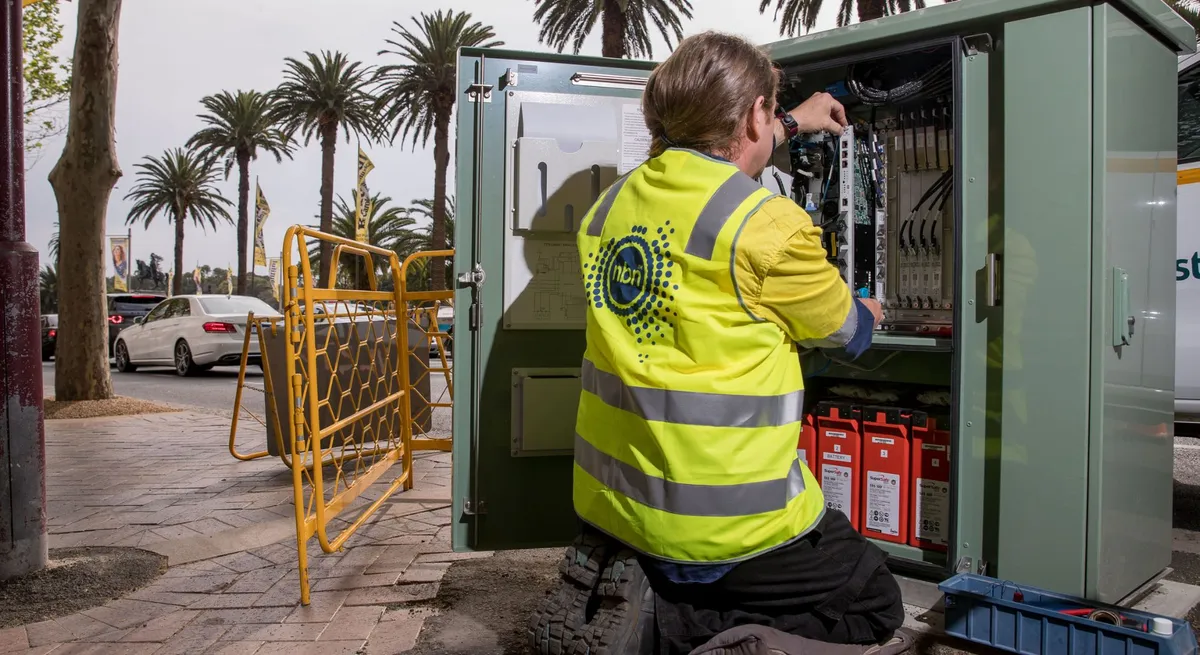
If you already connect via FTTP or HFC and you were signed up to an NBN 100 plan or higher, then you RSP should have automatically pushed the speed increases out to you. If this is you, but you're not achieving the maximum speeds promised by your plan, then you may want to consider a new modem-router to achieve the new maximum speeds of your plan, which we’ve detailed a little more below.
If you want to upgrade to the brand new NBN 2000 tier, however, then you’ll need to sign up for a plan via an NBN provider. Most customers signing up for NBN 2000 will also need a new network termination device (NTD), which requires a technician to visit your premises to install. This will be arranged after ordering the plan from your selected RSP.
If you currently connect via a fibre to the node (FTTN) or fibre to the curb (FTTC) connection, then you will need to have the equipment upgraded to FTTP to access any of these upgraded speeds. Many FTTN and FTTC connections can access this upgrade for free thanks to NBN Co’s free fibre upgrade program, as long as you live in an eligible suburb.
The majority of suburbs in Australia where a fixed-line NBN connection is available should now be eligible, and NBN Co has previously stated it had intended to make the program available to 10 million households by the end of 2025. I'm still awaiting confirmation as to whether this has been achieved.
If you don’t know what connection type is at your address, you can use the NBN’s free address checker to find out.
How much do the upgraded NBN plans cost?
NBN Co promised the upgraded speeds would arrive at no extra cost to RSPs, which in turn meant there shouldn't have been any price increase for customers. I can confirm, having constantly monitored the best NBN plans since their arrival, that they have indeed arrived at no extra cost.
In fact, in some cases I've seen NBN 500 plans being offered for less than an NBN 100 plan from the same provider. As a side note, I do see the 500Mbps tier becoming the most popular of all options, as in my opinion it offers enough speed for most homes at incredibly affordable prices.
I did wonder if there would be price increases from some providers due to accessing the internet that’s out of NBN Co’s hands – international bandwidth. Because the National Broadband Network infrastructure only operates within Australia, it’s up to each provider to organise its own international connections.
These are required to reach any sites or services that do not have servers located in Australia. While many major brands and platforms (such as YouTube, Facebook, Instagram, Microsoft and PlayStation) do have Australian servers, there are some notable exceptions – TikTok being a key one – and traffic to these does theoretically come at an additional cost to RSPs. In particular, if providers believe the increased speeds will strain their current capacity to serve international traffic – and they’ll therefore need to purchase more bandwidth to cope – they may pass on a small increase to customers’ monthly fees.
Will my current modem-router still work with the new speeds?

The main recommendation I can make regarding the upcoming speed boosts is, if you do get them, you’ll want to make sure you have a suitable Wi-Fi router at home that can support the faster speeds.
More specifically, you should arm yourself with at least a Wi-Fi 6 modem, or to futureproof yourself even more, Wi-Fi 7. Both of these Wi-Fi technologies are able to support greater overall bandwidth compared to Wi-Fi 5 routers, and much faster download speeds than Wi-Fi 4 routers. It should be stressed that an older Wi-Fi 4 router will likely struggle to provide the full bandwidth of an NBN 500 plan, so if you’re using an aging router on this plan, consider upgrading it.
A Wi-Fi 5 router is theoretically fast enough for up to an NBN 1000 plan in a perfect environment, but few of us live in one. So, to compensate for potential interference (like walls or other nearby routers) and the natural drop in speed that happens as you get further away from your router, it’s wise to upgrade to a model that will provide significantly more overall bandwidth than your NBN connection itself offers.
Considering more and more connected devices now integrate at least Wi-Fi 6, opting for a router that can match them is a good place to start.
For more information regarding routers and the NBN speed upgrades, be sure to read our in-depth guide.
What NBN plans should I get?
If all this talk about NBN speed upgrades has you giddy with excitement, but you're unsure which plan is best for you, I've highlighted a few below that I think offer immense value.
For more options, be sure to check out our guides to the best NBN 500 plans and the best NBN 750 plans.


You might also like
- View our current pick of the best NBN plans
- Find out who we rate as the best NBN provider
- Check out the best NBN 100 plans in line for the speed upgrade

You must confirm your public display name before commenting
Please logout and then login again, you will then be prompted to enter your display name.