
We named the iPhone 17 the best iPhone for most people thanks to its upgraded 120Hz display and storage options now starting at 256GB (compared to the iPhone 16’s 128GB), and the sales numbers so far are backing that claim.
These upgrades, as well as a more powerful A19 processor and improved cameras, came at the same price of AU$1,399 as the iPhone 16 had when it was launched in 2024, strengthening the value for money proposition. While it’s no longer the absolute cheapest current generation iPhones sold in Australia thanks to the iPhone Air getting big discounts, it’s still much easier to buy outright than the iPhone 17 Pro and Pro Max.
Best iPhone 17 plans: our picks
Best overall iPhone 17 plan

Best premium iPhone 17 plan
Compare iPhone 17 telco plans
Are you curious to see what other carriers are offering? Here's a quick look at what you'll pay each month for the 256GB iPhone 17, spread over a 24-month contract.
Outright iPhone 17 deals
The telco deals above aren't the only way to buy the new iPhone 17. If you can front the initial outlay, you'll pay much less in the long run by purchasing the phone outright and pairing it with one of our best SIM-only plans.
With all of Australia's major retailers wanting in on the action, there are plenty of options to choose from. In fact, we even saw some modest discounts during the Boxing Day 2025 sales, with some retaining the prices at the time of writing. You can find all the best offers available in the widget below.

iPhone 17 Specs comparison
| Header Cell - Column 0 | iPhone 17 | iPhone Air | iPhone 17 Pro | iPhone 17 Pro Max |
|---|---|---|---|---|
Price: | AU$1,399 | AU$1,799 | AU$1,999 | AU$2,199 |
Weight: | 177g | 165g | 206g | 233g |
Display: | 6.3-inch OLED | 6.5-inch OLED | 6.3-inch OLED | 6.9-inch OLED |
Resolution: | 2622 x 1206 | 2736 x 1260 | 2622 x 1206 | 2868 x 1320 |
Refresh rate: | 120Hz | 120Hz | 120Hz | 120Hz |
Peak brightness: | 3,000 nits | 3,000 nits | 3,000 nits | 3,000 nits |
Chipset: | A19 | A19 Pro | A19 Pro | A19 Pro |
Rear cameras: | 48MP wide, 48MP ultra-wide | 48MP wide | 48MP wide, 48MP ultra-wide, 48MP telephoto (8x optical zoom) | 48MP wide, 48MP ultra-wide, 48MP telephoto (8x optical zoom) |
Front camera: | 18MP | 18MP | 18MP | 18MP |
Storage: | 256GB, 512GB | 256GB, 512GB, 1TB | 256GB, 512GB, 1TB | 256GB, 512GB, 1TB, 2TB |
Colours: | Black, White, Mist Blue, Sage, Lavender | Space Black, Cloud White, Light Gold, Sky Blue | Silver, Cosmic Orange, Deep Blue | Silver, Cosmic Orange, Deep Blue |
What's new with the iPhone 17?

- 120Hz ProMotion display
- A19 Chip
- New 48MP 'Fusion' camera system
- New 18MP selfie camera with Center Stage
- Better battery life and improved charging
The iPhone 17 has got the same upgrades that its predecessors usually do. A new, more powerful processor, new colours and a boost to its CPU and GPU power.
However, there's a few other upgrades to this baseline model that we think make it better value than other regular iPhones that have come before it. That is, non-pro models.
The first and most obvious upgrade comes to the iPhone 17's display, which is now 6.3-inches, compared to the 6.1-inch iPhone 16. It also supports live activity and widgets on the lockscreen, and matches the peak brightness of the iPhone 17 Pro at 3,000 nits.
Moreover, the base model finally sports the 120Hz ProMotion display of its Pro siblings, which not only means it can reach those heights for gaming and entertainment, but can also crank down to 1Hz when it's not needed, saving battery in the process.
This improves the iPhone 17 to the point that its display can truly compete with those on the best Android phones. Apple's Ceramic Shield 2 glass also promises 3x better resistance over the iPhone 16, plus handling of reflections in bright environments thanks to its seven layers of anti-reflective coating.
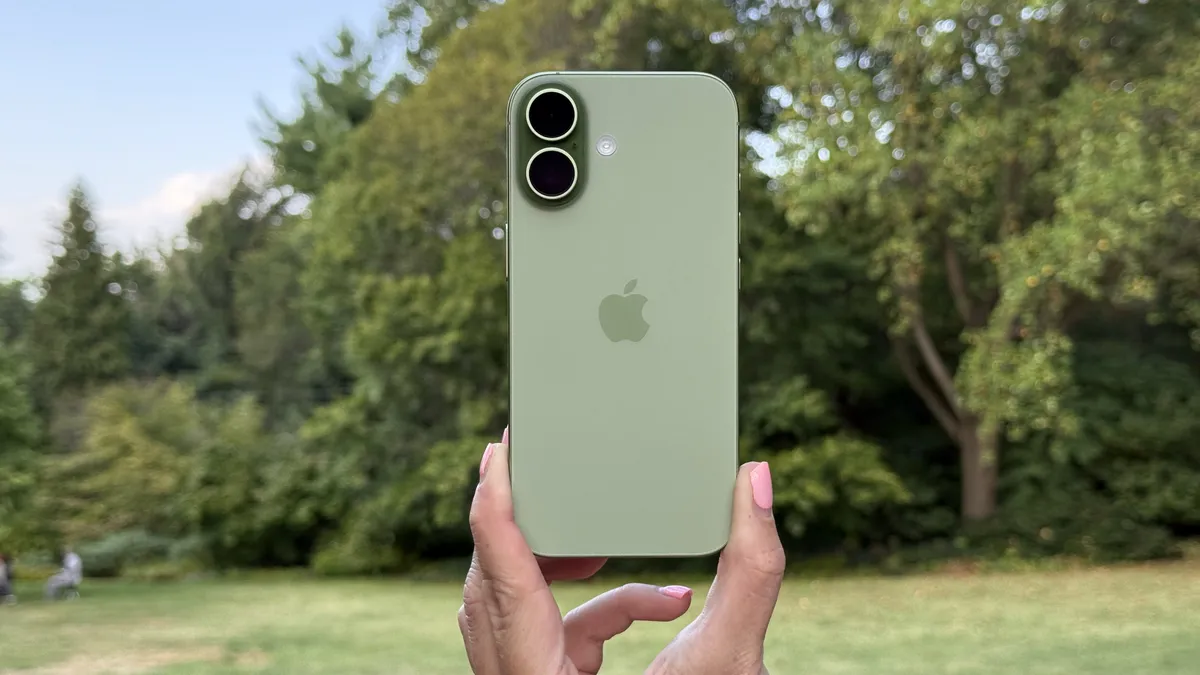
The iPhone 17 now also boasts an improved dual camera system with its new 48-megapixel 'Fusion' lens. Sitting in a vertical pill-like configuration, the bottom main lens has a 26mm focal length and a F.1.6 aperture, and sensor-shift optical image stabilisation. However, it also serves as a telephoto camera with a 2x optical zoom and a 52mm focal length.
The upper 48MP ultra-wide camera now offers four times the resolution to the iPhone 16's ultra-wide. It has a 13mm focal length, F.2.2 aperture and a 12MP 1x macro photography function with a 26mm focal length.
On top of that, Apple has boosted the front-facing camera to 18 megapixels, with a wider field of view thrown in to. And this lets users take both landscape and portrait photos without needing to turn the phone horizontally. The real upgrade here, though, is the AI-powered Center Stage feature, which automatically expands the field of view to better capture groups of people posing for a selfie snap.
Last, but certainly not least, Apple has made some serious improvements to both the battery and charging capabilities of its baseline handset.
Apple states that the improved efficiency of the A19 chip over its predecessor sees the iPhone 17 deliver "all-day" battery life – promising 30 hours of video playback. That's six more than the iPhone 16.
In our iPhone 17 review, we stated that video playback numbers don't easily translate to daily use, but we found that the iPhone 17 easily lasted all day on a consistent basis, even with the Always-On display turned on.
However, our favourite upgrade when it comes to battery is the improved charging ability of the 17. You'll need to use an optional high-wattage USB-C power adapter like Apple’s new 40W Dynamic Power Adapter to make the most of it, but the iPhone 17 boasts up to 40W fast charging when wired – reaching 80% in under an hour.
The iPhone 17 comes in only two models – 256GB and 512GB, and if unless you really need the cameras or power of the iPhone 17 Pro, it's easily one of the best upgrades from Apple in recent memory.
You might also like...
- Save on a new iPhone, iPad or Macbook with our Apple discount codes

You must confirm your public display name before commenting
Please logout and then login again, you will then be prompted to enter your display name.